 Skip to main content
Pigmentation Laser and IPL Guide
How we select treatment for sun spots, uneven tone and mixed redness/pigment patterns
Book ConsultationBerkshire Aesthetics is a CQC-registered medical aesthetic clinic in Maidenhead. All treatments begin with a consultation to assess suitability, medical history, risks and realistic outcomes.
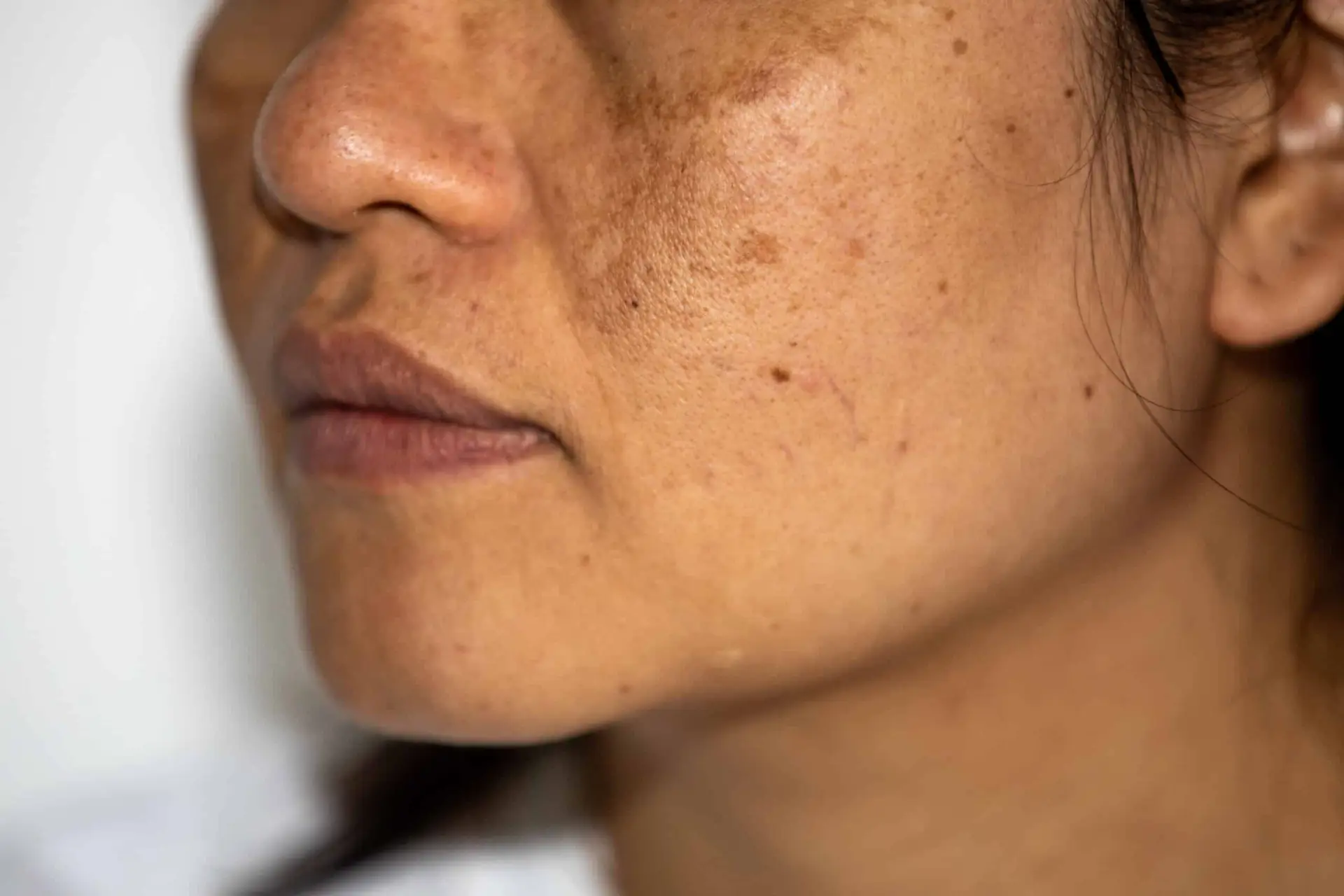
"Pigmentation" is not one diagnosis. Treatment outcomes improve when the underlying pattern is correctly identified first, for example epidermal sun spots, post-inflammatory pigment, mixed vascular/pigment tone, or melasma-prone pathways that require conservative planning.
At Berkshire Aesthetics, we use a diagnosis-first approach and often combine in-clinic procedures with medical-grade skincare for better long-term stability.
Common Concerns We Assess
- Sun spots and photodamage-related mottling
- Post-inflammatory pigmentation after acne or irritation
- Mixed vascular/pigment redness and dyschromia
- Uneven tone with visible textural dullness
Where M22 and Excel V+ Fit
Lumenis M22 IPL is commonly selected for diffuse photodamage and mixed tone correction. Cutera Excel V+ may be used when vascular contribution (redness/vessels) is dominant, including pigment concerns with a strong vascular overlay.
In some patients, laser/light is only one part of treatment. We may stage with peels, skincare, or other modalities based on relapse risk and skin reactivity.
Important Safety Notes
Recent sun exposure, active inflammation, and certain melasma patterns can increase complication risk, including rebound pigmentation. For this reason, conservative settings and staged protocols are often more effective than aggressive single-session treatment.
Daily broad-spectrum SPF and adherence to aftercare are mandatory for safe pigment treatment.
Visit pigmentation condition overviewRelated Treatments
Pigmentation Treatment FAQs
- Which is better for pigmentation: laser or IPL?
- Neither is universally better — the right choice depends on the pigmentation pattern, its depth, and your skin type. IPL (such as the Lumenis M22) is often first-line for diffuse epidermal sun spots and mixed-tone photodamage in lighter skin types. Q-Switch lasers are often preferred for discrete focal lesions and selected deeper pigment. Vascular lasers like the Cutera Excel V+ may be used when there is a strong redness overlay.
- Can melasma be treated with IPL or laser?
- Melasma requires conservative planning. Aggressive IPL or ablative lasers can trigger rebound pigmentation and worsen the condition. First-line management usually combines broad-spectrum SPF, prescription pigment-regulating topicals, gentle chemical peels, and only selected low-fluence laser pathways under careful supervision. A definitive "cure" is unusual — ongoing maintenance is typically required.
- How many sessions will I need to treat sun spots?
- Discrete epidermal sun spots often respond to 2–4 IPL sessions spaced 3–4 weeks apart. More extensive diffuse photodamage may require 4–6 sessions. Results are cumulative: each session removes a portion of the visible pigment, and strict sun protection between and after sessions is essential to avoid rebound.
- Will my pigmentation come back after treatment?
- It can. Pigmentation is influenced by cumulative UV exposure, hormones and inflammation — all ongoing factors. Without daily broad-spectrum SPF and a good maintenance routine, new pigment can develop. We consider laser/IPL to be one component of treatment alongside medical skincare and behavioural sun protection.
- Is IPL safe on darker skin tones?
- IPL is generally best suited to lighter Fitzpatrick skin types (I–III). In darker skin types (IV–VI) the risk of post-inflammatory pigmentation and unintended bleaching is significantly higher. We assess skin type carefully at consultation and will recommend alternative pathways — conservative lasers, chemical peels or medical skincare — where IPL is not appropriate.
- What is the downtime after pigmentation laser or IPL treatment?
- Most IPL protocols involve mild redness for 24–72 hours. Pigmented spots often temporarily darken ("coffee grounds") before flaking off over 5–10 days. Q-Switch and ablative laser pathways can involve longer recovery depending on intensity. Strict SPF 50 is mandatory before and after treatment for at least 4 weeks.
- Can I have laser or IPL with a tan?
- No. Recent sun exposure or active tan significantly increases the risk of unintended bleaching, burns and rebound pigmentation. We postpone treatment until the tan has fully faded, typically 4–6 weeks of strict sun avoidance. This also applies to sunbeds and fake tan for the preceding 2 weeks.
Why we start with a consultation
Every treatment begins with a medical assessment. We need to understand your medical history, current health, skin condition and concerns before prescribing any procedure. This protects your safety and ensures the treatment is clinically appropriate for you.
During your consultation, your clinician will explain what the treatment can realistically achieve, any risks specific to you, and whether an alternative might be more appropriate. Consultations are carried out by our doctors or advanced aesthetic practitioners, depending on the treatment or concern being assessed.
All bookings are subject to our Booking Conditions.
Not sure what you need?
Try our free AI skin analysis to identify your main concerns and see suggested treatments.
Start free skin analysis →This content is for informational purposes only and does not constitute medical advice. Individual suitability for any treatment is assessed during a consultation. Always seek the guidance of a qualified medical professional with any questions regarding a medical condition or treatment.

Want a Pigmentation Plan That Is Safe for Your Skin Type?
Book a consultation for diagnosis, risk assessment and a staged treatment strategy.
Read more about the treatments discussed here