 Skip to main content
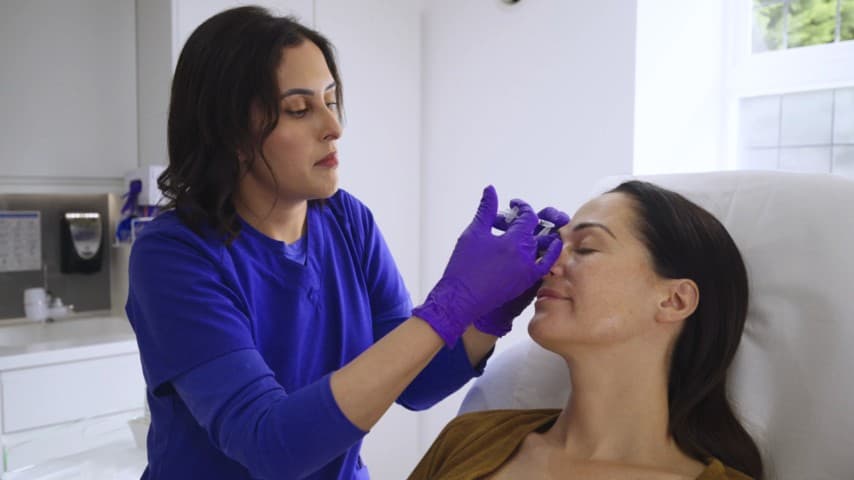
Anti-Wrinkle Injection Safety & Consent in the UK
What you should know before having anti-wrinkle injections
Book ConsultationBerkshire Aesthetics is a CQC-registered medical aesthetic clinic in Maidenhead. All treatments begin with a consultation to assess suitability, medical history, risks and realistic outcomes.
Anti-wrinkle injections use a prescription-only injectable medicine available under several brand names in the UK. Under UK advertising rules — specifically the Human Medicines Regulations 2012 and guidance from the Advertising Standards Authority (ASA) — it is not permissible to promote prescription-only medicines by brand name to the public. For this reason, this guide uses the term “anti-wrinkle injections” throughout and does not name the products.
This guide is designed to help you understand the safety considerations, regulatory framework, and consent process involved in having anti-wrinkle injections in the UK. It is not a substitute for a clinical consultation, but it should help you ask the right questions and make a more informed decision about your treatment.
How anti-wrinkle injections work
The active ingredient in anti-wrinkle injections is a neuromodulator — a substance that temporarily affects the way nerve signals are transmitted to muscles. When injected in very small, controlled doses into specific facial muscles, it reduces the muscle’s ability to contract. This relaxation of the muscle smooths the overlying skin and reduces the appearance of lines and wrinkles that are caused by repeated facial expressions, such as frowning, squinting, or raising the eyebrows.
The prescription medicine used in anti-wrinkle injections has been used in medicine for several decades. It was originally developed for the treatment of medical conditions including muscle spasms, excessive sweating (hyperhidrosis), migraines, and certain eye conditions. Its cosmetic applications were discovered subsequently, and it has been used for aesthetic purposes since the early 2000s. It is well-established in both medical and cosmetic practice.
The effects of anti-wrinkle injections are not immediate; the effect develops over the days following treatment and is temporary. As it wears off, muscle activity gradually returns to normal and lines reappear, and treatment can be repeated. Because this is a prescription-only medicine, we do not publish specific onset or duration figures — these vary between individuals, areas and doses, and your prescriber will explain what to expect at your consultation.
It is important to understand that anti-wrinkle injections do not “freeze” the face when administered correctly. The aim of treatment is to reduce excessive muscle movement while preserving natural facial expression. An experienced practitioner will adjust the dose and injection sites to achieve a result that looks natural and proportionate. Over-treatment — resulting in a “frozen” or expressionless appearance — is a sign of poor technique or excessive dosing, not an inevitable consequence of the treatment.
Regulation in the UK
The active ingredient is classified as a prescription-only medicine (POM) in the UK. This means it can only be prescribed by a qualified prescriber — a doctor, dentist, or an appropriately qualified nurse or pharmacist with independent prescribing rights. The prescriber must assess the patient before issuing a prescription, and they are clinically and legally responsible for that prescribing decision.
However, once prescribed, the actual injection of the treatment can legally be performed by someone who is not a prescriber. This has led to a range of practice models in the UK, some of which raise significant safety concerns. In some clinics, a doctor may prescribe remotely — sometimes via a brief telephone call or an online questionnaire — without ever physically examining the patient. The injection may then be performed by a practitioner with variable levels of training and experience. While not illegal, this model falls short of what most medical professionals would consider acceptable clinical practice.
The Advertising Standards Authority (ASA) regulates how anti-wrinkle treatments can be promoted to the public. Because it is a prescription-only medicine, it cannot be advertised by brand name to consumers. Clinics cannot offer promotions, discounts, or special offers that specifically name the product. Advertising should focus on the treatment and its outcomes rather than promoting a specific product. Clinics that advertise branded deals or similar promotions may be in breach of these rules.
The Joint Council for Cosmetic Practitioners (JCCP) maintains a voluntary register of practitioners who meet its standards for training, insurance, and professional conduct. While registration with the JCCP is not legally required, it provides patients with an additional means of verifying a practitioner’s credentials. The JCCP also provides a register of approved clinics and educational institutions.
At present, there is no mandatory licensing scheme for non-surgical cosmetic practitioners in the UK beyond the existing requirements for prescribing. This means that, in practice, anyone can set up as a cosmetic practitioner and perform treatments that do not involve prescription medicines — including dermal filler injections — without any formal training, qualifications, or insurance. This regulatory gap has been widely criticised and there are ongoing discussions about introducing mandatory standards, but for now, the responsibility falls largely on patients to verify their practitioner’s credentials.
Informed consent
Informed consent is a cornerstone of ethical medical practice and is particularly important in the context of cosmetic treatments, which are elective procedures undertaken for aesthetic rather than medical reasons. Good consent is not simply a signature on a form — it is a process that ensures you fully understand what is being proposed, what the risks are, and what alternatives exist.
A proper consent process for anti-wrinkle injections should include a clear explanation of the procedure, including what it involves, how it works, and what the expected outcomes are. Your practitioner should set realistic expectations and be honest about what the treatment can and cannot achieve. They should explain the potential risks and side effects — both common and rare — in a way that you can understand. They should also discuss any alternative treatments that might address your concerns.
You should be given a cooling-off period between your consultation and the treatment itself. This is time for you to reflect on the information you have been given, consider whether you wish to proceed, and ask any further questions. A cooling-off period is particularly important for first-time patients. Clinics that offer same-day treatment to new patients — particularly those that combine the consultation and treatment into a single appointment — may not be allowing sufficient time for genuine informed consent.
Consent should be documented in writing. You should receive a consent form that sets out the treatment being proposed, the risks discussed, and your agreement to proceed. You have the right to withdraw your consent at any time — before, during, or after the procedure. No practitioner should pressure you into having a treatment, and no financial penalty should apply if you decide not to proceed after your consultation.
Good consent also involves an assessment of your motivations and expectations. A responsible practitioner will explore why you want the treatment, what you hope to achieve, and whether your expectations are realistic. If a practitioner believes that treatment is not in your interests — for example, if your expectations are unrealistic, if there are medical contraindications, or if they have concerns about your psychological wellbeing — they have a professional duty to decline to treat.
Common risks and side effects
Like all medical treatments, anti-wrinkle injections carry risks. Most side effects are minor, temporary, and resolve without intervention. However, more serious complications can occur, and it is important that you are aware of these before proceeding with treatment.
Common side effects
- Bruising: Small bruises at the injection sites are common and typically resolve within a few days to a week. Bruising can be minimised by avoiding blood-thinning medications and supplements before treatment, where clinically appropriate.
- Headache: Some patients experience a mild headache following treatment, particularly after treatment to the forehead area. This usually resolves within 24 to 48 hours.
- Temporary heaviness: Some patients notice a feeling of heaviness in the treated area during the first few days as the treatment begins to take effect. This typically resolves as the patient adjusts to the reduced muscle activity.
- Redness and swelling: Mild redness and swelling at the injection sites are normal and generally settle within a few hours.
Less common side effects
- Eyelid droop (ptosis): This is an uncommon but recognised side effect that occurs when the active ingredient migrates to affect the muscle that raises the upper eyelid. It is usually temporary and resolves as the effect wears off, but it can take several weeks. The risk can be minimised by correct injection technique and appropriate dosing.
- Asymmetry: Some degree of facial asymmetry is natural, and anti-wrinkle treatment may occasionally accentuate this. Asymmetry can usually be corrected with a small additional dose at a follow-up appointment.
- Eyebrow droop or elevation: Changes in eyebrow position can occur if the balance of muscle activity is altered by the treatment. This is usually temporary and resolves as the effect wears off.
If you experience any unexpected or concerning symptoms following treatment, you should contact your treating clinic promptly. Serious adverse events are rare but require immediate clinical attention. A reputable clinic will have protocols in place for managing complications and will provide clear aftercare instructions and emergency contact details.
Red flags to watch for
Not all clinics operate to the same standard. Being aware of warning signs can help you avoid practitioners who may not be providing safe, ethical treatment. The following are indicators that should prompt caution:
- 1.Same-day treatment without a proper consultation:
A consultation should be a separate appointment that allows time for assessment, discussion, and reflection. Clinics that offer to treat you on your first visit, without a meaningful assessment or cooling-off period, may be prioritising convenience or revenue over patient safety.
- 2.No medical history taken:
A thorough medical history is essential before any injectable treatment. This should include questions about allergies, medications, medical conditions, previous treatments, and pregnancy or breastfeeding status. If no medical history is taken, the practitioner cannot properly assess whether treatment is safe for you.
- 3.Discount or bulk pricing pressure:
Promotional offers, “group deals,” or aggressive discounting can be signs that a clinic is treating cosmetic procedures as a commodity rather than a medical treatment. Time-limited offers and pressure to book immediately are particularly concerning, as they undermine the cooling-off period that is considered essential for informed consent.
- 4.No named prescriber:
If you are having anti-wrinkle injections, you should know who is prescribing the medication. A clinic that cannot or will not tell you who the prescriber is, or that uses remote prescribing without a proper assessment, is not operating to an acceptable standard.
- 5.Inability to manage complications:
Ask what would happen if you experienced a complication. If the practitioner does not have a clear protocol for managing adverse events, or if they would simply tell you to go to A&E, they may not be adequately prepared to provide safe treatment.
- 6.Treatment in non-clinical settings:
Injectable treatments should be performed in a clean, clinical environment with appropriate infection control measures. Treatment offered at house parties, in hotel rooms, at retail counters, or in other non-clinical settings raises serious safety concerns about hygiene, storage of products, and the ability to manage emergencies.
Our approach to safety
At Berkshire Aesthetics, patient safety is the foundation of everything we do. Injectable treatments are prescribed by our GMC-registered doctors, with clinical governance led by Dr Selena Langdon as Medical Director. We do not prescribe remotely for new patients, and every patient receives a thorough clinical assessment before any treatment is considered.
We operate a consultation-first model, meaning that new patients are always seen for a consultation before treatment. This consultation includes a detailed medical history, a clinical examination, and an honest discussion about what treatment can realistically achieve. We provide a cooling-off period between consultation and treatment, and we never pressure patients to proceed.
The clinic is registered with the Care Quality Commission (CQC), which means we meet recognised standards for healthcare provision and are subject to regulatory inspection. We have documented protocols for managing complications, including the emergency medications and equipment necessary to respond to serious adverse events.
We use only products sourced through authorised UK pharmaceutical distributors, ensuring that the medications used in your treatment are genuine, properly stored, and within their expiry date. We maintain comprehensive patient records, and all patients have access to clear aftercare instructions and a direct line to the clinic for any post-treatment concerns.
You can read more about our approach to clinical governance and patient safety on our safety page.
Related treatments & reading
Related Treatments
Anti-Wrinkle Safety FAQs
- Are anti-wrinkle injections safe?
- Anti-wrinkle injections have a strong safety record when prescribed and administered by a medically qualified practitioner in an appropriate clinical setting. The active ingredient has been used in medicine for decades. Most side effects are mild and temporary — bruising, mild headache, or short-lived heaviness. More serious complications such as eyelid droop are uncommon and usually resolve as the effect wears off.
- How long do anti-wrinkle injections last?
- The effect is temporary and wears off gradually, after which muscle activity returns to normal. Because these are prescription-only medicines, clinics should not advertise specific timings to the public — duration varies between individuals, the dose used and the area treated, and is explained during your face-to-face consultation.
- Who legally prescribes anti-wrinkle injections in the UK?
- In the UK the active ingredient is classified as a prescription-only medicine (POM). It can only be prescribed by a qualified prescriber — a doctor, dentist, or an appropriately qualified nurse or pharmacist with independent prescribing rights. The prescriber must assess the patient before issuing a prescription and is clinically and legally responsible for that decision.
- Is remote prescribing for anti-wrinkle injections legal?
- Remote prescribing is legal once an initial assessment has been performed, but prescribing for a patient the doctor has never examined in person is widely considered poor practice by medical regulators including the GMC. At Berkshire Aesthetics, we do not prescribe remotely for new patients — every patient is assessed face-to-face before any prescription is issued.
- Can anti-wrinkle injections be advertised by brand name in the UK?
- No. Under the Human Medicines Regulations 2012 and ASA guidance, prescription-only medicines cannot be promoted to the public by brand name. Clinics should not offer brand-named promotions, discounts or special offers. Advertising should describe the treatment and outcomes, not the product.
- What are the warning signs when choosing an anti-wrinkle provider?
- Red flags include same-day treatment on your first visit, no medical history being taken, time-pressured discounting, no named prescriber, treatment in non-clinical settings (hotels, house parties or retail counters) and clinics that cannot explain how they would manage a complication. Any of these should prompt you to look elsewhere.
- How much do anti-wrinkle injections cost?
- Because anti-wrinkle injections are a prescription-only medicine, we do not advertise prices for them to the public. Cost depends on the number of areas treated and is confirmed at your face-to-face consultation. Be cautious of very low prices or special offers, which can be a sign of compromised product sourcing, training, or clinical governance — and which clinics should not advertise for prescription-only treatments.
Why we start with a consultation
Every treatment begins with a medical assessment. We need to understand your medical history, current health, skin condition and concerns before prescribing any procedure. This protects your safety and ensures the treatment is clinically appropriate for you.
During your consultation, your clinician will explain what the treatment can realistically achieve, any risks specific to you, and whether an alternative might be more appropriate. Consultations are carried out by our doctors or advanced aesthetic practitioners, depending on the treatment or concern being assessed.
All bookings are subject to our Booking Conditions.
Not sure what you need?
Try our free AI skin analysis to identify your main concerns and see suggested treatments.
Start free skin analysis →This content is for informational purposes only and does not constitute medical advice. Individual suitability for any treatment is assessed during a consultation. Always seek the guidance of a qualified medical professional with any questions regarding a medical condition or treatment.
- CQC registered clinic — registered and regulated
- Clinical oversight and prescribing by Dr Selena Langdon (GMC 6159259)
- Complaints process and patient rights
Page last reviewed: February 2026
Start With a Medical Consultation
Every treatment begins with a face-to-face assessment with our clinical team.