 Skip to main content
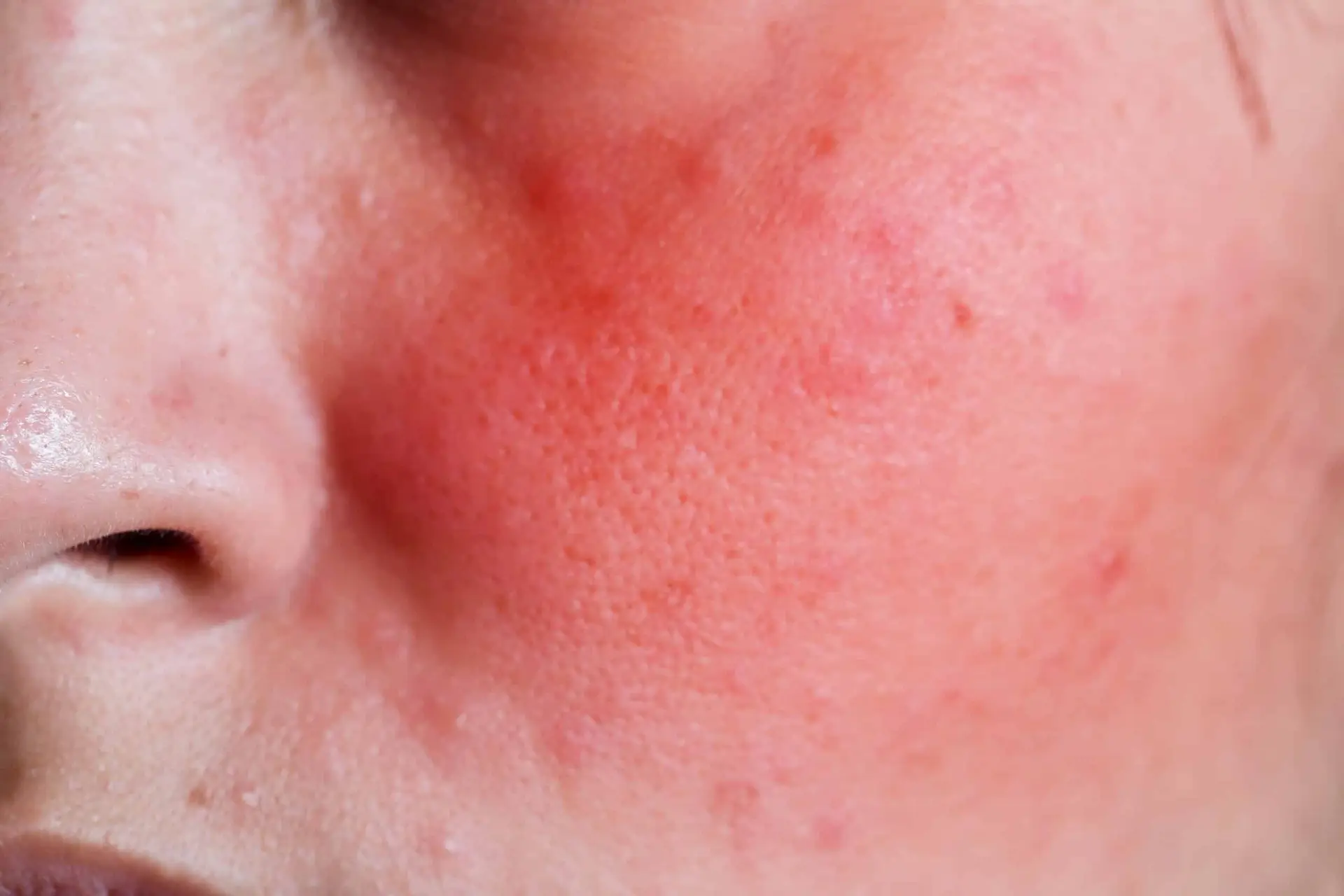
Rosacea Laser Treatment Guide
How we choose between vascular laser and IPL pathways for redness and flushing
Book ConsultationBerkshire Aesthetics is a CQC-registered medical aesthetic clinic in Maidenhead. All treatments begin with a consultation to assess suitability, medical history, risks and realistic outcomes.
Rosacea is a chronic inflammatory condition with multiple subtypes. Because trigger patterns, vessel prominence and inflammatory activity vary, treatment should be staged rather than protocol-driven.
In our clinic, laser and light treatments are used to manage the vascular component of rosacea. We combine this with trigger control, barrier-support skincare and follow-up to improve long-term control.
Primary Treatment Goals
- Reduce persistent background redness
- Treat visible vessels around the nose and cheeks
- Reduce flare frequency and intensity over time
- Improve tolerance for skincare and trigger management plans
Excel V+ or M22 IPL?
For discrete vessels and vessel-dominant redness, we often prioritise Cutera Excel V+. For broader colour correction across diffuse redness and pigment overlap, Lumenis M22 IPL can be a strong option.
Many patients need a combination strategy over time. Treatment choice can shift between phases as redness, inflammation and vessel visibility change.
Expectations and Safety Points
Improvement is usually progressive across a treatment course. Rosacea is generally controlled, not cured, so maintenance and trigger control remain important. Temporary redness and swelling are common after treatment; strict SPF and thermal-trigger management help reduce rebound flaring.
Not all facial redness is rosacea. Differential diagnosis matters, especially where dermatitis, acne, steroid changes, or pigmentation are present.
Visit the rosacea condition pageRosacea Laser Treatment FAQs
- Does laser treatment for rosacea work?
- Yes. Vascular lasers (such as the Cutera Excel V+) and IPL devices (such as the Lumenis M22) are well-evidenced for reducing persistent redness, visible blood vessels and flushing in rosacea. They do not cure the condition, but they can significantly reduce its visible signs. Most patients see improvement after a course of 3–5 sessions, with maintenance treatments to sustain results.
- IPL or vascular laser for rosacea — which is better?
- Both work, but they target redness differently. Vascular laser is more selective for individual visible vessels and is often better for focal telangiectasia. IPL covers broader areas and suits diffuse background redness and mixed skin tone concerns. Most patients benefit from one or the other; some need a staged combination. The right choice is decided at consultation based on your rosacea subtype and skin type.
- How many sessions of laser for rosacea do I need?
- A typical course is 3 to 5 sessions spaced 4 to 6 weeks apart. Patients with mainly diffuse redness often respond faster; those with thicker vessels or more severe flushing may need additional sessions. Maintenance treatments once or twice a year are usually recommended to keep results stable.
- Is rosacea laser treatment safe?
- Rosacea laser and IPL are safe when delivered in a regulated clinical setting by trained practitioners with appropriate patient selection and test patches. Possible side effects include temporary redness, swelling, mild bruising and (rarely) pigment change — risk is higher in Fitzpatrick IV–VI skin and with sun-exposed skin, which is why careful assessment is essential before treatment.
- Can rosacea come back after laser treatment?
- Laser and IPL reduce visible redness and vessels but do not change the underlying rosacea process. Flares can still occur if triggers are not managed, and new vessels can develop over time. This is why rosacea is treated as a long-term management plan combining in-clinic treatment, trigger control and gentle skincare — not a one-off fix.
- How much does rosacea laser treatment cost in Maidenhead?
- Costs depend on device, treatment area and number of sessions. At Berkshire Aesthetics, rosacea laser and IPL sessions are priced individually at consultation. See our prices page or ask at consultation for an exact quote tailored to your plan.
Why we start with a consultation
Every treatment begins with a medical assessment. We need to understand your medical history, current health, skin condition and concerns before prescribing any procedure. This protects your safety and ensures the treatment is clinically appropriate for you.
During your consultation, your clinician will explain what the treatment can realistically achieve, any risks specific to you, and whether an alternative might be more appropriate. Consultations are carried out by our doctors or advanced aesthetic practitioners, depending on the treatment or concern being assessed.
All bookings are subject to our Booking Conditions.
Not sure what you need?
Try our free AI skin analysis to identify your main concerns and see suggested treatments.
Start free skin analysis →This content is for informational purposes only and does not constitute medical advice. Individual suitability for any treatment is assessed during a consultation. Always seek the guidance of a qualified medical professional with any questions regarding a medical condition or treatment.
Need a Rosacea-Specific Plan?
Book a consultation for diagnosis, trigger review and an evidence-based treatment sequence.