What to expect from anti-wrinkle injections

Anti-Wrinkle Injections: What to Expect

A doctor-led guide to results, risks, aftercare and how long they last

Book Consultation
Reviewed by Dr Selena Langdon, Medical DirectorGMC 6159259

Anti-wrinkle injections are the most widely performed non-surgical cosmetic treatment in the UK. They use a prescription medicine that is injected in very small doses into specific facial muscles, temporarily reducing their activity and softening the lines and wrinkles that form when those muscles contract. The treatment is quick, requires no downtime, and when performed by an experienced medical professional produces subtle, natural-looking results.

Despite their popularity, there is a significant amount of misinformation about anti-wrinkle injections circulating online. This guide has been written by our clinical team at Berkshire Aesthetics in Maidenhead to provide straightforward, evidence-based information about what the treatment involves, what results you can realistically expect, how long those results last, and what the risks are. Whether you are considering anti-wrinkle injections for the first time or are an experienced patient looking for a new clinic, this guide is designed to help you make an informed decision.

The active ingredient in anti-wrinkle injections is a prescription-only medicine that works by temporarily blocking the nerve signals to targeted muscles. When those muscles are less active, the overlying skin appears smoother and the dynamic lines — the wrinkles that appear when you frown, squint or raise your eyebrows — are significantly reduced. It is important to understand that anti-wrinkle injections treat dynamic wrinkles (those caused by muscle movement) rather than static wrinkles (lines that are visible even when your face is at rest), although regular treatment can help prevent dynamic lines from becoming permanently etched into the skin over time.

Who is suitable for anti-wrinkle injections?

Anti-wrinkle injections are suitable for most healthy adults who wish to soften facial lines and wrinkles caused by repeated muscle movement. The treatment is most commonly sought by patients between the ages of 25 and 65, although there is no strict upper or lower age limit. Some patients in their late twenties or early thirties seek treatment preventatively — aiming to slow the development of lines before they become deeply established — while others in their fifties and sixties use anti-wrinkle injections as part of a broader facial rejuvenation plan alongside other treatments such as dermal fillers or skin-tightening procedures.

The most commonly treated areas are the glabellar complex (the frown lines between the eyebrows), the lateral canthal lines (commonly known as crow’s feet around the eyes), and the horizontal forehead lines. Other areas that can be treated include bunny lines on the nose, a gummy smile, dimpling of the chin, downturned corners of the mouth, platysmal bands on the neck, and excessive sweating (hyperhidrosis) in the underarms, palms, or forehead.

During your consultation, your doctor will assess your facial anatomy, skin quality, and muscle movement patterns to determine which areas would benefit from treatment and how many units are likely to be needed. This individualised assessment is one of the most important parts of the process — a skilled practitioner treats the person, not simply the wrinkle.

Anti-wrinkle injections are not suitable for everyone. You should not have treatment if you are pregnant, breastfeeding, or trying to conceive. Patients with certain neuromuscular disorders such as myasthenia gravis or Lambert-Eaton syndrome should not receive anti-wrinkle injections. If you are taking blood-thinning medications, have an active skin infection in the treatment area, or have a known allergy to any component of the product, your doctor will advise against treatment. During your consultation at Berkshire Aesthetics, Dr Langdon will take a full medical history to ensure treatment is clinically appropriate for you.

What happens during your appointment

At Berkshire Aesthetics, every anti-wrinkle injection treatment begins with a thorough face-to-face consultation. This is not a formality — it is a clinical necessity. During this consultation, Dr Selena Langdon will discuss your concerns, assess your facial anatomy and muscle movement, review your medical history, and explain what treatment can realistically achieve. This is also your opportunity to ask questions, discuss your expectations, and understand the risks involved.

If you and Dr Langdon agree that anti-wrinkle injections are appropriate, treatment can usually be carried out on the same day as your consultation, although some patients prefer to take time to consider their options before proceeding. There is no pressure to go ahead on the day — the decision is always yours, and informed consent is taken seriously at our clinic. You can read more about our approach to consent in our safety and consent guide.

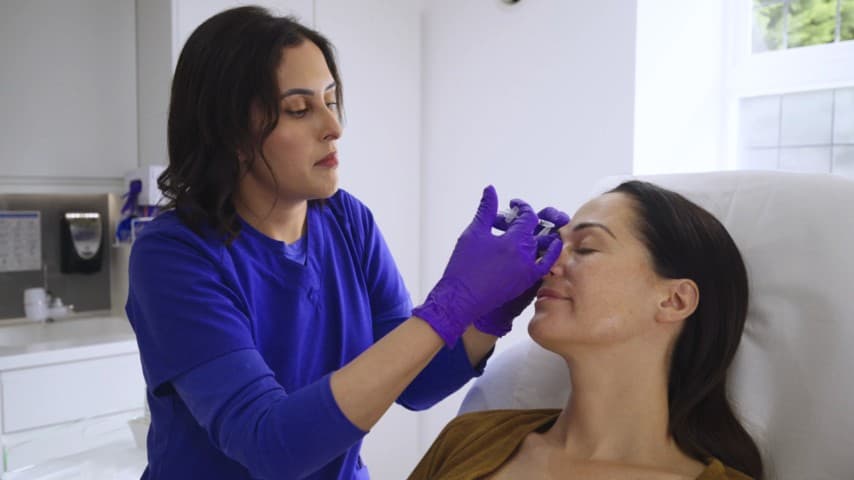
The injection procedure itself is quick. For a typical treatment involving the frown lines, forehead, and crow’s feet, the actual injection process takes approximately ten to fifteen minutes. A very fine needle is used, and the injections are placed at precise points determined by your anatomy and the results you are hoping to achieve. Most patients describe the sensation as a mild sting or pinch — it is generally well tolerated and anaesthetic is not usually required, although a topical numbing cream can be applied if you are particularly sensitive.

Following treatment, you can return to your normal activities immediately. There is no significant downtime. You may notice small red marks at the injection sites, which typically fade within an hour or so. Dr Langdon will provide you with specific aftercare advice before you leave the clinic.

Results and how long they last

Anti-wrinkle injections do not produce immediate results. The prescription medicine takes time to take effect, and most patients begin to notice a softening of their lines within three to five days of treatment. However, it can take up to fourteen days for the full effect to develop, and we advise patients not to judge their results until at least two weeks have passed. The treatment typically reaches its peak effect at around two to four weeks after injection.

At Berkshire Aesthetics, we offer a complimentary review appointment at two weeks post-treatment. This allows Dr Langdon to assess your results, check for symmetry, and make any minor adjustments if needed. This review is an important part of the treatment process and is included as standard — it is one of the advantages of choosing a clinic that prioritises clinical outcomes over volume.

The results of anti-wrinkle injections are temporary. For most patients, the effects last between three and four months, after which muscle activity gradually returns and the lines begin to reappear. Some patients find that with regular treatment over time, the effects seem to last a little longer, as the muscles become conditioned to reduced activity.

Several factors can influence how long your results last. These include the strength and size of the muscles being treated, your metabolism (patients with faster metabolisms may find the effects wear off more quickly), the dose used, and how physically active you are. Patients who exercise very intensely or very frequently sometimes report a shorter duration of effect, although this is not universal. Your doctor will discuss expected longevity during your consultation, based on your individual presentation.

Risks and side effects

Like any medical treatment, anti-wrinkle injections carry risks. A responsible clinic will always discuss these with you before treatment, and you should be wary of any practitioner who downplays or fails to mention them. Full transparency about risks is a hallmark of good clinical practice and is part of the informed consent process. Our detailed guidance on safety at Berkshire Aesthetics covers our protocols in full.

The most common side effects are mild and temporary. These include slight redness, swelling, or tenderness at the injection sites, minor bruising (which can take a few days to resolve), and a mild headache on the day of treatment. These effects are typically short-lived and do not interfere with daily activities.

Less common but more significant side effects include a feeling of heaviness in the forehead, particularly if the forehead muscles are treated aggressively. This can sometimes cause the brow to drop slightly, giving a tired or heavy appearance. Careful, conservative dosing and an understanding of the interplay between the different muscle groups of the upper face can help minimise this risk. This is one of the many reasons why the experience and anatomical knowledge of your injector matters so much.

Rare but serious complications include ptosis (drooping of the upper eyelid), which occurs when the product migrates to affect the muscle that lifts the eyelid. Ptosis is uncommon when injections are placed correctly and is almost always temporary, resolving as the product wears off, but it can be distressing while it lasts. In extremely rare cases, the effects of the treatment can spread beyond the intended area, causing temporary weakness in nearby muscles. This is why precise injection technique and appropriate dosing are critical, and why you should always choose a practitioner who has extensive training and experience in facial anatomy.

If you experience any unexpected symptoms following your treatment, you should contact your treating clinic promptly. At Berkshire Aesthetics, patients have direct access to Dr Langdon for post-treatment support. This is a key advantage of being treated at a genuinely doctor-led clinic.

Aftercare and maintenance

Good aftercare helps to optimise your results and reduce the risk of side effects. After your anti-wrinkle injection treatment, you will be advised to remain upright for at least four hours and to avoid rubbing or massaging the treated areas for twenty-four hours. This helps to prevent the product from migrating away from the intended injection sites.

You should also avoid strenuous exercise, saunas, steam rooms, and excessive alcohol consumption for the first twenty-four hours after treatment. While these precautions are based on practical experience rather than large-scale clinical trials, they are widely recommended by experienced practitioners and are considered good practice.

Some patients notice that gently contracting the treated muscles (for example, frowning or raising the eyebrows) in the hours after treatment seems to help the product take effect. While the evidence for this is anecdotal, it is commonly suggested by practitioners and is unlikely to cause any harm.

In terms of long-term maintenance, anti-wrinkle injections are not a one-off treatment. Because the effects are temporary, most patients return for repeat treatment every three to four months to maintain their results. Over time, your treating doctor will get to know your face, your preferences, and your response to treatment, allowing for increasingly refined and personalised results. Some patients find that after several rounds of treatment, they can extend the interval between sessions slightly.

At Berkshire Aesthetics, we take a long-term approach to treatment planning. Rather than treating each appointment in isolation, Dr Langdon considers your overall facial harmony and how anti-wrinkle injections fit within a broader plan that might include other treatments such as dermal fillers, skin boosters, or skin-tightening procedures. This holistic approach tends to produce the most natural and satisfying results.

Choosing the right provider

Anti-wrinkle injections are a prescription-only treatment, which means they must be prescribed by a qualified medical prescriber. However, the standard of care you receive can vary enormously depending on where you go. Choosing the right provider is one of the most important decisions you will make, and price alone should never be the deciding factor.

We recommend looking for a clinic where a doctor personally assesses you, prescribes the treatment, and ideally performs the injections themselves. A doctor who is GMC-registered and who has specific training in facial aesthetics will have a deep understanding of facial anatomy, the pharmacology of the products being used, and the management of any potential complications. You should be able to verify your doctor’s registration on the GMC website.

CQC registration is another indicator of quality. While not legally required for all aesthetic clinics, CQC registration means the clinic meets recognised standards for healthcare provision and is subject to regulatory inspection. At Berkshire Aesthetics, we are proud to be CQC-registered, reflecting our commitment to clinical governance, infection control, and patient safety.

Be cautious of clinics that offer anti-wrinkle injections at heavily discounted prices, that use high-pressure sales tactics, or that do not offer a face-to-face consultation before treatment. A consultation is not an inconvenience — it is an essential clinical step that protects your safety and ensures the treatment plan is right for you. Our comprehensive guide on how to choose an aesthetic clinic covers this topic in greater detail.

If you are considering anti-wrinkle injections in Maidenhead, Berkshire, or the surrounding areas, we would welcome the opportunity to discuss your options. You can get in touch with our team or book a consultation to take the first step.

Why we start with a consultation

Every treatment begins with a medical assessment. We need to understand your medical history, current health, skin condition and concerns before prescribing any procedure. This protects your safety and ensures the treatment is clinically appropriate for you.

During your consultation, Dr Langdon will explain what the treatment can realistically achieve, any risks specific to you, and whether an alternative might be more appropriate.

All bookings are subject to our Booking Conditions.

Doctor-led approach

This content is for informational purposes only and does not constitute medical advice. Individual suitability for any treatment is assessed during a consultation. Always seek the guidance of a qualified medical professional with any questions regarding a medical condition or treatment.

Clinical governance

Page last reviewed: February 2026

Ready to Start Your Journey?

Book a consultation with our expert team today.